AI Product Ad Creatives for E-Commerce
Turn one product into several ad angles and image variations with AI, then test them to find what sells. A practical guide for e-commerce sellers.
Most e-commerce ads fail quietly. You pour effort into one beautiful image, run it, and it does okay — but you never find out whether a different angle would have doubled your sales. The fix isn’t a bigger budget. It’s testing several versions of your creative at once, and that used to mean a photographer, a designer, and a week of waiting. Now you can generate several ad angles and image variations for one product in a few minutes, keep what works, and spend your money on media instead of mockups.
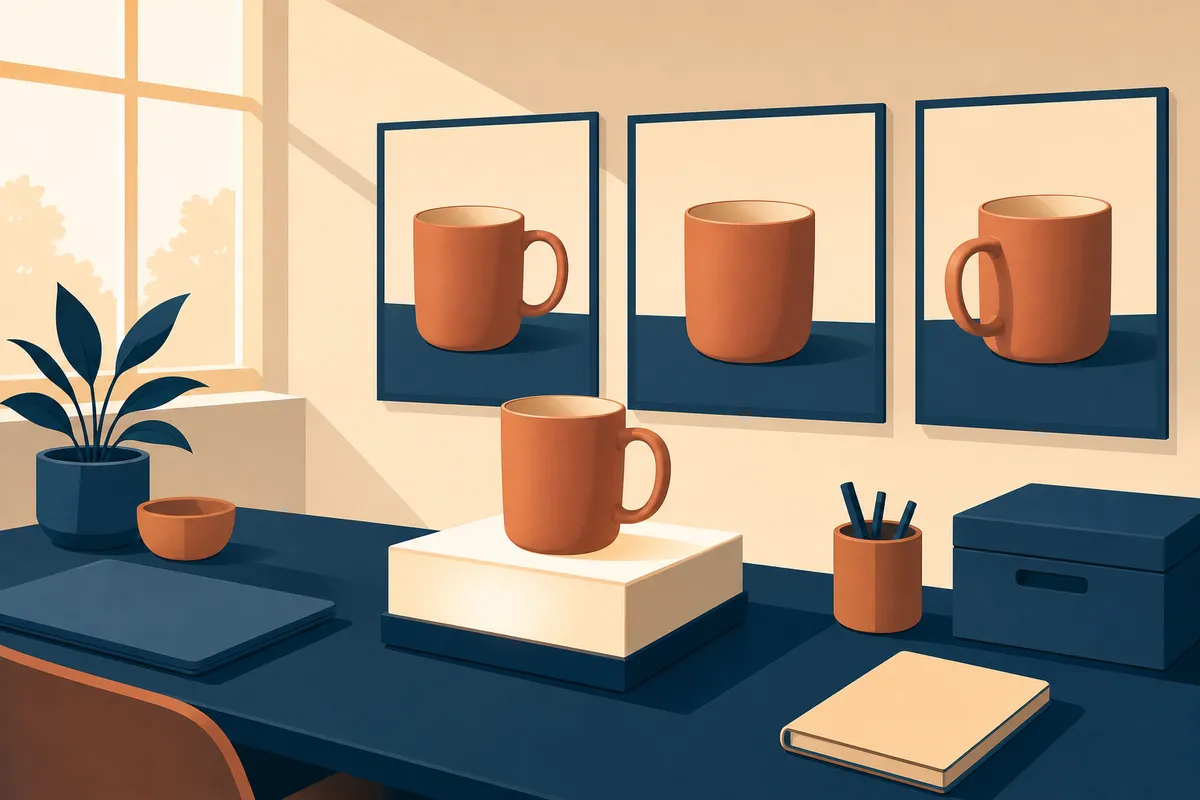
This guide walks through how to use AI to build product ad creatives for your store, what angles to test first, and how to read the results. We’ll use the Product Ad format in Artistik, which turns one sentence about your product into 3 or 5 image variations plus ad copy, ready for Instagram, Facebook, or TikTok.
Why image variations beat one perfect ad
There’s a comfortable lie in e-commerce: that somewhere out there is one perfect creative, and if you just design it carefully enough, it will carry your whole campaign. In practice, the ad that wins is almost never the one you expected. The audience decides, not you.
That’s why testing matters more than polish. When you run several versions of an ad — same product, different angle — you let real clicks tell you what resonates. Maybe your customers respond to a clean benefit shot. Maybe they respond to a “tired of X?” problem-solution framing. You can’t know until the numbers come in, and you can’t test what you never made.
The old barrier was cost. Shooting and designing five creative variations was expensive and slow, so most small sellers made one and hoped. AI removes that barrier. When a batch of variations costs about the price of a coffee, you can afford to be wrong four times out of five — because the one that wins pays for everything.
What counts as an “angle”
An angle is the story your ad tells about the product. The same mug can be sold four different ways:
- Benefit: “Keeps your coffee hot until the last sip.”
- Problem-solution: “Lukewarm coffee by 9am? Not anymore.”
- Social proof: “The mug people keep reordering.”
- Bold claim: “The only mug you’ll ever buy again.”
Each one speaks to a different buyer in a different mood. The Product Ad format gives you these four angles to choose from, so you’re not just testing different pictures — you’re testing different reasons to buy.
What the Product Ad format actually makes
Before you build anything, it helps to know exactly what you get, so you can plan the rest of your campaign around it.
For one product, the Product Ad format produces 3 or 5 image variations delivered as a ZIP, plus matching ad copy. You pick the platform — Instagram, Facebook, or TikTok — and the angle, and you get finished creatives sized and written for that placement.
What it does not do is run your ads. Artistik makes the creative; buying media, setting budgets, choosing audiences, and optimizing the campaign is your job. Think of it as the design-and-copy step, not the media-buying step. That’s a fair trade: the part that used to be slow and expensive is now fast and cheap, and the part only you can do — knowing your customer and your margins — stays with you.
It’s also worth being clear that these are generated images built from your description. They’re excellent for scroll-stopping lifestyle and concept creatives, benefit framings, and bold-claim layouts. If your brand depends on a pixel-perfect photo of your exact SKU down to the stitching, treat AI creatives as the top-of-funnel test and your real product photography as the detail page.
Set up your product brief
Good creatives start with a clear brief. The model works from your sentence, so the more specific you are, the better the result. Here’s what to include:
- What the product is, plainly. “Insulated stainless steel water bottle,” not “hydration solution.”
- Who it’s for. Gym-goers, busy parents, students — this shapes the mood.
- The main benefit. The one thing a buyer gets. Pick the strongest, not all of them.
- The vibe. Clean and minimal, bright and energetic, premium and calm.
- Your colors. Artistik makes the creative, not your full brand system, so name your brand colors in the brief if they matter.
A quick example you could paste and adjust:
A 24oz insulated stainless steel water bottle in matte sage green, for people who work out before work. Main benefit: ice stays frozen for 24 hours. Bright, energetic gym-adjacent vibe. Brand colors sage green and cream. Instagram feed. Benefit angle, 5 variations.
That single sentence gives the model everything it needs: the product, the buyer, the hook, the look, the platform, and the test size.
A step-by-step workflow for testing ad angles
Here’s a simple loop you can run for any product in your store. The goal is to go from one product to a tested winner without overcomplicating it.
Step 1: Pick your first two angles
Don’t test all four at once on day one. Choose two angles that feel most different from each other — say benefit and problem-solution. Testing opposites gives you a clearer signal than testing two versions of the same idea.
Step 2: Generate variations for each angle
On the Product Ad page, enter your brief, pick the first angle, and choose 5 variations. Do the same for the second angle. You now have 10 creatives built around two distinct stories. Your first piece is free to preview, so you can see the quality before you commit.
Step 3: Shortlist by gut, then by rule
Open the ZIP and lay the images side by side. Cut anything that’s visually muddy or off-brand. Then apply one rule: does the hook read in under a second on a phone screen? Scroll past each one quickly. The ones that still register are your contenders. You’ll usually end up with two or three strong creatives per angle.
Step 4: Run a small, fair test
Put your shortlist into your ad platform with equal budgets and the same audience. Keep everything identical except the creative, or you won’t know what caused the difference. Give it enough spend and time to collect real data — a trickle of impressions tells you nothing.
Step 5: Read the result and reinvest
Look at the metric that matters for your funnel — usually click-through rate for cold traffic, or cost per purchase if you’re further down. Pause the losers. Take the winning angle and generate a fresh batch of variations in that direction to find your next improvement. This is the whole game: keep what wins, replace what loses, repeat.
Step 6: Refresh before fatigue sets in
Even a winning ad tires out. When your numbers start sliding, that’s your cue to generate new variations rather than letting a stale creative drain budget. Because a batch costs so little, keeping a fresh rotation is realistic even on a small store.
Matching creatives to each platform
The three platforms reward different things, and the Product Ad format lets you pick which one you’re building for.
Instagram feed rewards clean, aspirational imagery with tight copy. Minimal and premium vibes tend to perform here. Lead with the benefit or a bold claim.
Facebook tolerates — and often rewards — more explanatory creatives. Problem-solution framing works well, and so does social proof, because Facebook buyers often want a reason to trust before they click.
TikTok wants native, less-polished energy. Bold, vibrant, and problem-solution angles that feel like a discovery rather than a billboard tend to stop the scroll. Over-designed ads can read as “ad” and get skipped.
If you’re selling across all three, generate a batch per platform rather than reusing one set everywhere. The small extra cost is worth it, because a creative that wins on Instagram can flop on TikTok for reasons that have nothing to do with your product.
What it costs to test creatives with AI
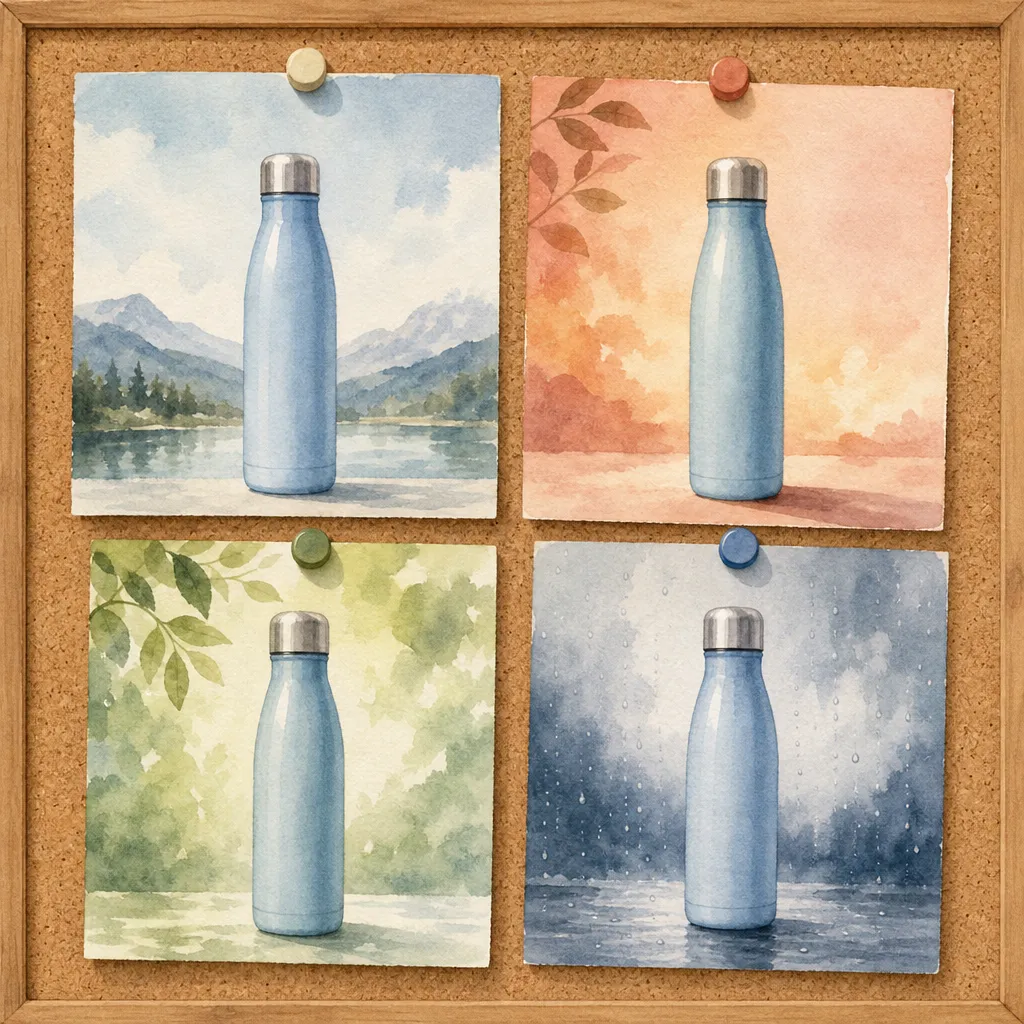
The real appeal here is how cheap testing becomes. A full batch of image variations plus copy usually costs well under a dollar to make. Here’s how Product Ad compares to a few related formats in Artistik, using measured per-piece costs.
| Format | Typical cost per piece | Best for |
|---|---|---|
| Product Ad | about $0.15–$0.50 | Image variations + copy to test on social |
| Short-form video | about $0.15–$1 | A 9:16 video hook for TikTok, Reels, Shorts |
| UGC Ad | about $0.30–$4 | Creator-style vertical ad with a talking persona |
| Carousel | about $0.01–$0.10 | A multi-slide swipe ad or mini product story |
Paying is simple. Your first piece is free, with up to $1 of free credit to start, and previews are watermarked. You can keep any single piece for a one-off $4.99, add credit from $5 (bigger packs add a bonus), or go with a monthly plan from $9 if you’re making ads regularly. See full details on the pricing page. At these prices, the question stops being “can I afford to test?” and becomes “why would I only make one?”
When to add video and other formats
Images are the fastest, cheapest way to find a winning angle, which makes Product Ad a great starting point. But once you know which story works, video often extends that win to new placements.
If your benefit angle crushes it as a static image, try turning that same angle into a Short-form video with a voiceover and captions, or a creator-style UGC Ad with a talking persona. Just know the person on screen in a UGC Ad is a generated face, not a real reviewer, and pieces are labeled as AI — be upfront about that with your audience.
For a longer product story or a how-it-works piece, a Carousel lets you walk through features one slide at a time. And if you’re building a content engine around your niche — reviews, buying guides, category deep-dives — a self-running podcast via Autopilot can keep publishing episodes that bring buyers into your world over time.
Start with images, prove the angle, then spend on the richer formats where the payoff is clear. That order keeps your testing budget honest.
Frequently asked questions
Can Artistik run my ads for me? No. Artistik makes the creative — the images and the copy — but buying media, setting budgets, and optimizing campaigns is up to you. You take the finished files and upload them to your ad platform.
Are the product images real photos of my item? They’re generated creatives built from your description, so they’re ideal for scroll-stopping and concept ads but won’t match your exact SKU detail. Use AI creatives to test angles at the top of the funnel, and keep your real photography for the product page.
How many variations should I test at once? Start with two clearly different angles, five variations each, then shortlist two or three per angle before you spend. Testing opposites gives you a cleaner signal than testing small tweaks of the same idea.
Do I own the ad creatives I make? Yes. What you unlock is yours — royalty-free, commercial use allowed, with no attribution and no revenue share. You can use the creatives in paid campaigns freely.
Can I set my brand colors? Yes, name your brand colors in the brief and the creatives will use them. Just remember the format makes the creative, not your full brand system, so treat it as a strong starting point rather than a locked brand template.
Start testing today
You don’t need a bigger budget to find ads that work — you need more shots on goal. Generate a few angles for your best-selling product, run a fair test, and let your customers show you what sells. Your first piece is free, so there’s nothing to lose by seeing a batch of variations for yourself. Head to the Product Ad page, describe your product in a sentence, and build your first test.