Multi-Voice AI Podcasts: How Conversational Audio Gets Made
Discover how multi-voice AI podcasts work, what makes them sound natural, and how creators can produce finished conversational audio without a recording studio.
Conversational podcasts consistently outperform solo-narration formats in listener retention, but producing them has always required coordinating multiple schedules, a decent microphone setup, and hours of editing. AI has changed that equation entirely, making it possible to generate a finished, multi-voice episode from a single written prompt. This article walks through exactly how that process works, what separates a believable AI dialogue from a robotic one, and what you should know before you publish.
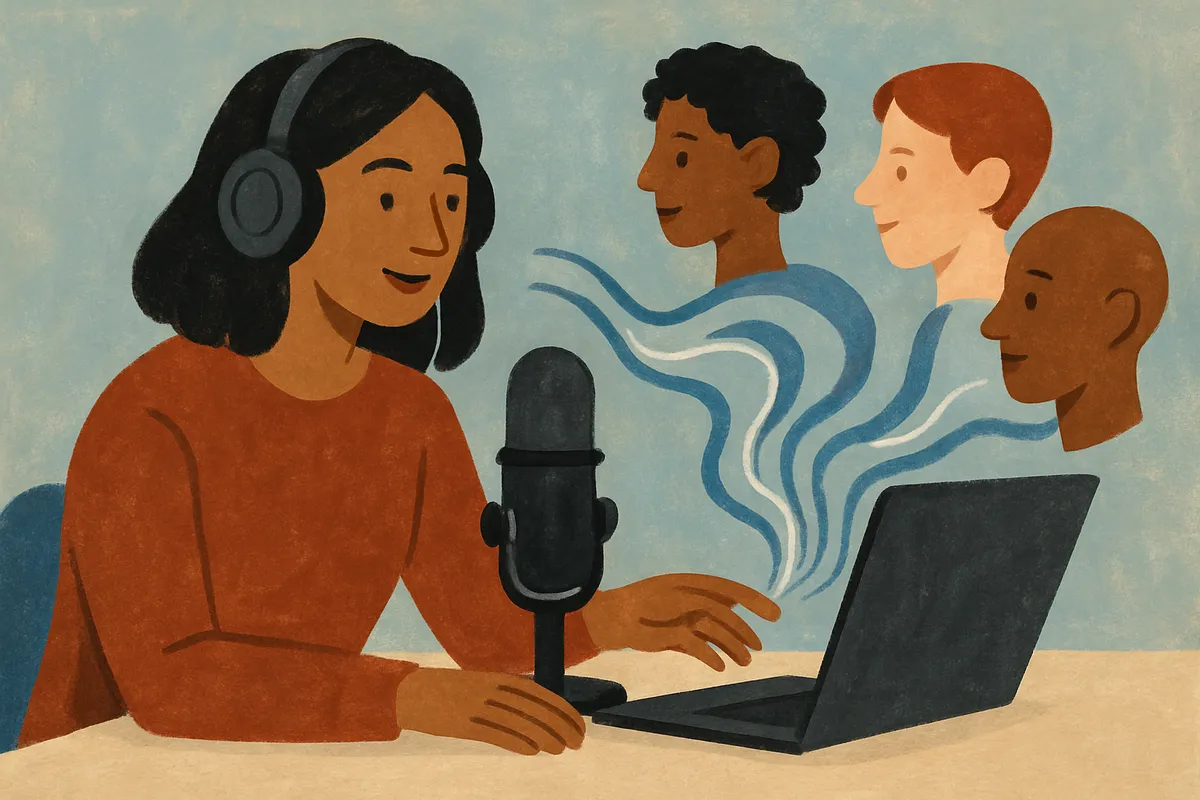
Why Conversational Format Matters for Podcasts
Listeners are wired for dialogue. When two distinct voices debate, agree, push back, or tell a story together, the brain engages differently than it does with a single narrator. That engagement translates into longer average listening times, higher completion rates, and stronger word-of-mouth. The challenge has never been the concept — it has been the logistics.
Traditional production requires at minimum:
- Two or more hosts or guests available at the same time
- Acceptable recording conditions on every participant’s end
- An editor to clean up crosstalk, remove filler, and balance levels
- A second pass for music, transitions, and export
AI-generated multi-voice podcasts collapse that list into one step: describe what you want.
How Multi-Voice AI Audio Is Actually Generated
Under the hood, the process has two distinct stages: script generation and voice synthesis.
Script generation uses a large language model to write a structured dialogue. The prompt you supply (topic, tone, host personas, episode length, target audience) becomes the blueprint. The model does not just alternate lines mechanically — it builds in natural patterns like one host finishing a thought before the other reacts, moments of agreement, light disagreement, and topic transitions that mirror how real conversations flow.
Voice synthesis then assigns each speaker a distinct text-to-speech voice. Modern neural TTS systems handle prosody (the rhythm and emphasis of speech) well enough that a carefully scripted line sounds reasonably natural when rendered. The biggest gains come from:
- Giving each voice a different pitch range and speaking pace
- Building pauses and breath cues into the script
- Varying sentence length so voices do not sound metronomic
- Using contractions and informal phrasing the way actual speakers do
The output is a single mixed MP3 where two voices carry on a coherent conversation from start to finish.
What Makes an AI Dialogue Sound Natural (or Not)

The realism gap in AI podcasts comes almost entirely from the script layer, not the voice layer. Voice models have improved dramatically; stiff, unnatural scripts have not. Here is what distinguishes good AI dialogue from a transcript that happens to be read aloud:
| Element | Robotic version | Natural version |
|---|---|---|
| Agreement | “Yes, that is correct.” | “Right, and that connects to something else…” |
| Disagreement | “I disagree with that statement.” | “I am not sure I buy that — here is why.” |
| Transitions | “Moving on to the next topic.” | “That actually reminds me of…” |
| Filler and rhythm | None, perfectly smooth | Brief pauses, restarts, hedges like “I think” |
| Reaction phrases | None | “Interesting,” “That tracks,” “Go on” |
The prompt you write for the AI is your primary lever. If you instruct the system to write two hosts with distinct opinions and give each a personality trait (one data-focused, one story-driven), the resulting script will have genuine tension that makes audio worth listening to.
Structuring a Prompt for a Strong Episode
Think of your prompt as a producer’s brief. The more specific you are, the less editing the output needs. A strong prompt covers:
- Topic and angle: Not just “AI in healthcare” but “whether AI diagnostic tools are ready to be used in rural clinics without specialist oversight”
- Host personas: Name, background, and one distinguishing opinion or bias for each
- Episode length: Approximate word count or time target (roughly 130 words per minute of audio)
- Tone: Journalistic, conversational, educational, debate-style
- Structure: Cold open, main discussion, a specific number of subtopics, closing takeaway
- Audience: Who is listening and what they already know
The more of those fields you fill in, the more the generated script sounds like something your actual audience would seek out.
From Script to Finished File: The Production Workflow
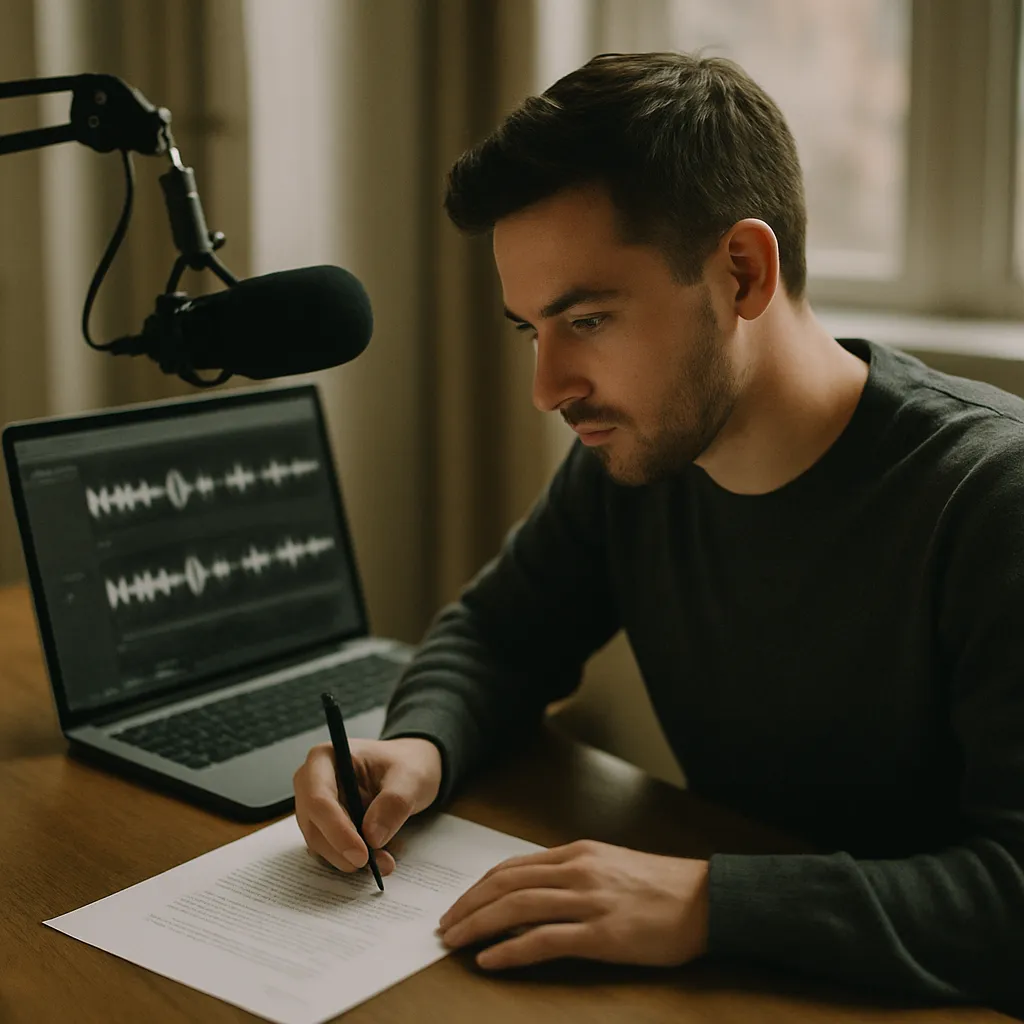
When you start a podcast on Artistik, the platform handles both the script and the audio render in a single session. You supply the prompt; the system returns an MP3 of the finished episode alongside a text transcript. That transcript is useful on its own — it is ready to paste into show notes, embed as closed captions, or repurpose as a blog post.
The workflow looks like this:
- Enter your topic, personas, and any structural requirements in plain language
- Review the generated script if you want to make edits before audio is rendered
- Download the finished MP3 and transcript
- Add to your hosting platform, publish, and distribute
Because everything you generate through Artistik is royalty-free and fully yours, there are no licensing conversations before you monetize an episode or sell a branded podcast series to a client.
Practical Use Cases for Multi-Voice AI Podcasts
The format is more versatile than it might initially seem. Creators are using it for:
- Content marketing: Weekly industry-discussion episodes published under a brand, without hiring hosts
- Education: Socratic-style dialogues that walk students through a concept as a debate rather than a lecture
- Companion audio for long-form content: A conversational podcast episode that summarizes or extends a written report
- Language learning: Dialogue-heavy audio at a controlled vocabulary level, in the target language
- Fiction: Dramatic readings or in-universe interviews that expand a story world
If you are already producing long-form written work, consider pairing it with audio. A report that becomes a podcast and a graphic novel reaches audiences who would never sit with the original document.
Frequently Asked Questions
How many distinct voices can an AI podcast have? Most platforms, including Artistik, support at least two distinct speakers, which is enough for a standard host-and-guest or co-host format. More complex panel formats with three or four voices are technically possible but require more careful scripting to keep the listener oriented about who is speaking.
Can I use AI-generated podcast audio commercially? Yes. Content created through Artistik is royalty-free and belongs to you. You can publish it on paid podcast platforms, sell episodes, use them in client deliverables, or distribute them however you choose.
Does an AI podcast come with a transcript? Artistik delivers both an MP3 and a full transcript. The transcript is useful for SEO-optimized show notes, accessibility compliance, and repurposing the content into other formats.
How realistic do AI voices actually sound in 2024? Neural TTS voices have advanced considerably. Most listeners, in blind tests, find modern AI voices acceptable for information-focused content. The perceived naturalness still depends heavily on script quality — a well-written, conversational script renders far better than a formal, written-prose script read aloud.
Start Your First Episode Today
Producing a multi-voice podcast used to mean coordinating calendars, renting a studio, or settling for uneven audio quality from a remote setup. Now it means writing a good brief and pressing a button. If you have a topic worth discussing, Artistik can turn it into a finished, downloadable episode — complete with two distinct voices and a ready-to-publish transcript — in one session. Write the brief, get the episode, and start building an audience.