How to Make a Graphic Novel Without an Illustrator
You don't need an artist on retainer to publish a graphic novel. Learn how AI tools let writers produce illustrated, print-ready comics from a single prompt.
For decades, making a graphic novel meant either learning to draw or splitting royalties with an artist. Neither option worked for most writers. AI creative tools have changed that equation completely — today you can go from a story concept to a finished, illustrated, downloadable graphic novel without hiring anyone.
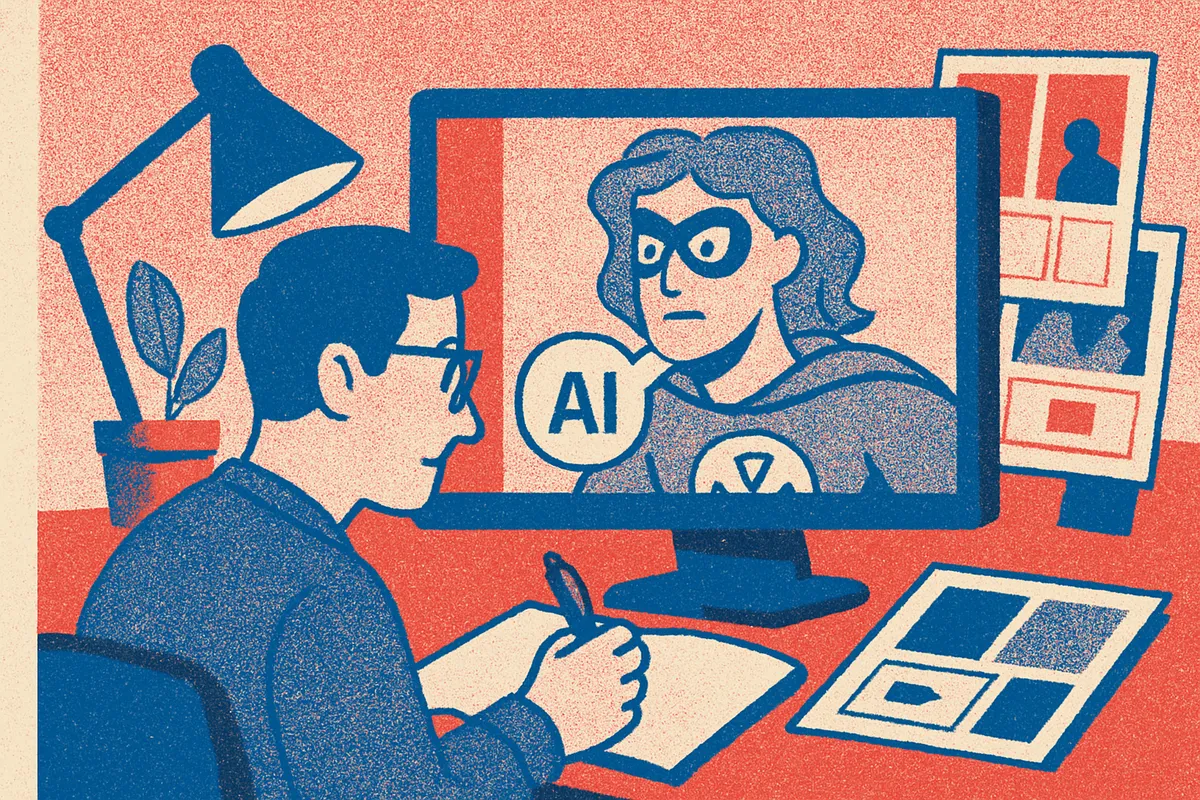
Why Graphic Novels Are Worth Making Right Now
Graphic novels sit at a rare intersection of high demand and low supply. Readers consume them faster than publishers can produce them, and independent creators who own their content outright are well positioned to sell across print-on-demand platforms, digital storefronts, and Kickstarter. The barrier has always been illustration cost — professional comic artists routinely charge $75–$200 per page, which puts a 120-page graphic novel out of reach for most independent creators. AI removes that barrier while leaving you with full ownership of the finished work.
What You Actually Need Before You Start
AI handles the art, but you still need to bring the story. Before you open any tool, get these elements clear on paper:
- Premise in one sentence. A disgraced astronaut stranded on a generation ship must expose a corporate conspiracy before the crew wakes from cryo-sleep. That level of specificity is enough to start.
- Main characters with visual traits. Hair color, build, clothing style, distinguishing marks. The more concrete you are, the more consistent your character art will be across panels.
- Tone and art style. Noir with heavy shadows? Bright Saturday-morning adventure? Manga-influenced black and white? Naming a visual reference style in your prompt dramatically improves output coherence.
- A rough act structure. You do not need a full script, but knowing your three acts or six-beat story structure prevents the common mistake of generating pages without a destination.
How AI Graphic Novel Generation Actually Works
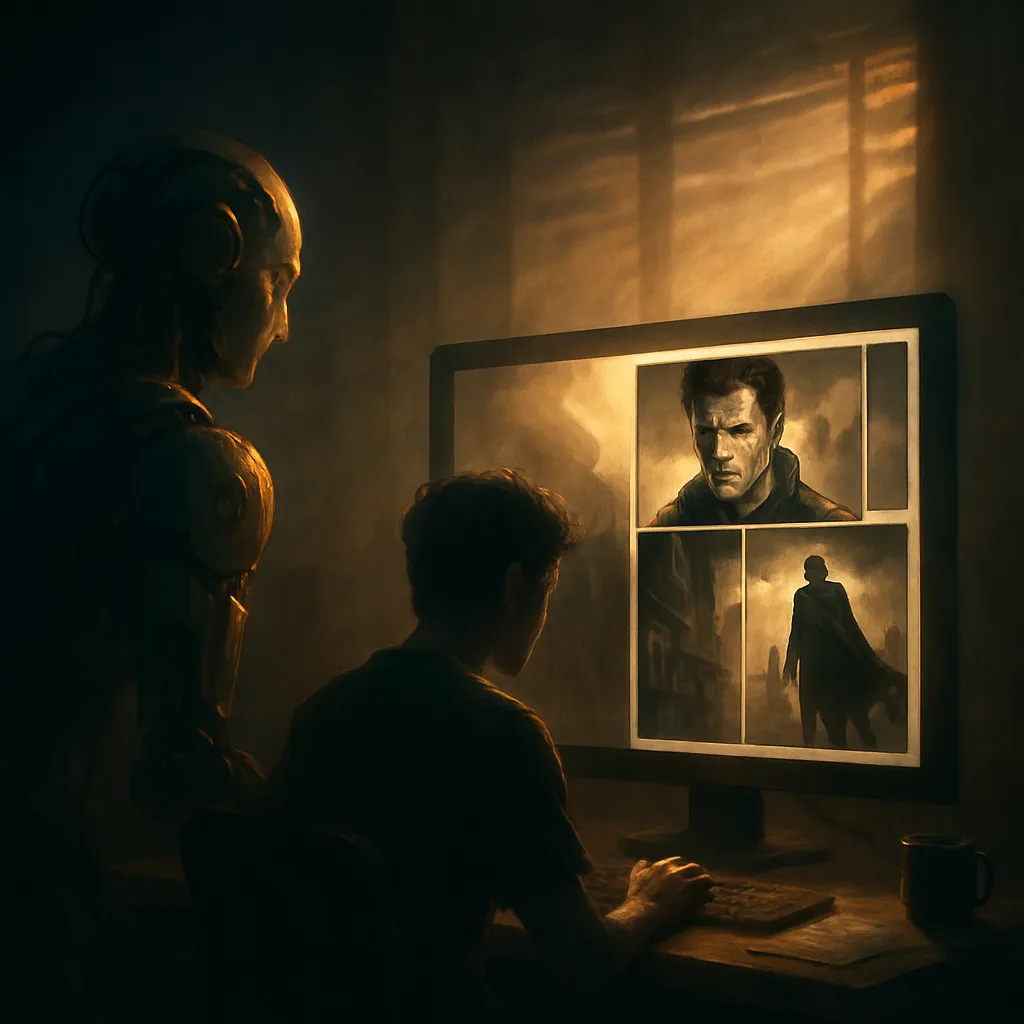
Different tools handle the pipeline differently. Artistik treats the graphic novel as a single creative object: you describe your story, characters, and style in natural language, and the platform generates a complete illustrated ZIP file containing sequenced panels, dialogue, and scene composition. You are not stitching together individual image generations in separate apps — the output is a structured, readable graphic novel.
Under the hood, the process moves through several stages:
- Story parsing. Your prompt is broken into scenes, each mapped to a panel count and pacing rhythm.
- Character modeling. Visual descriptions are held consistent across panels so your protagonist does not change hair color between pages.
- Panel composition. Each panel receives a camera angle, foreground/background split, and action beat appropriate to the scene’s emotional weight.
- Dialogue and caption placement. Speech bubbles and caption boxes are positioned to follow natural reading flow.
- File packaging. The finished output arrives as a downloadable ZIP ready for review, editing, or direct upload to a publishing platform.
Writing Prompts That Produce Better Panels
The single biggest quality lever you control is prompt specificity. Vague prompts produce generic panels. Here is the difference in practice:
| Vague prompt | Specific prompt |
|---|---|
| A hero fights a villain | A scarred female bounty hunter in a leather duster grapples with a chrome-masked mercenary on a rain-soaked rooftop, low camera angle, noir style |
| A sad scene | A teenage boy sits alone in a school cafeteria, tray untouched, other students blurring into the background, muted blue color palette |
| An action sequence | Four horizontal panels: establishing shot of a highway chase, close-up on white-knuckled steering wheel, wide shot of car launching off an overpass, final panel black with the sound effect of impact |
Style keywords that consistently improve AI graphic novel output include: ink wash, cel shading, cross-hatching, flat color with thick outlines, painted realism, and monochrome with spot color. Pick one and stay consistent throughout your prompt.
Structuring Your Story for Panel Efficiency
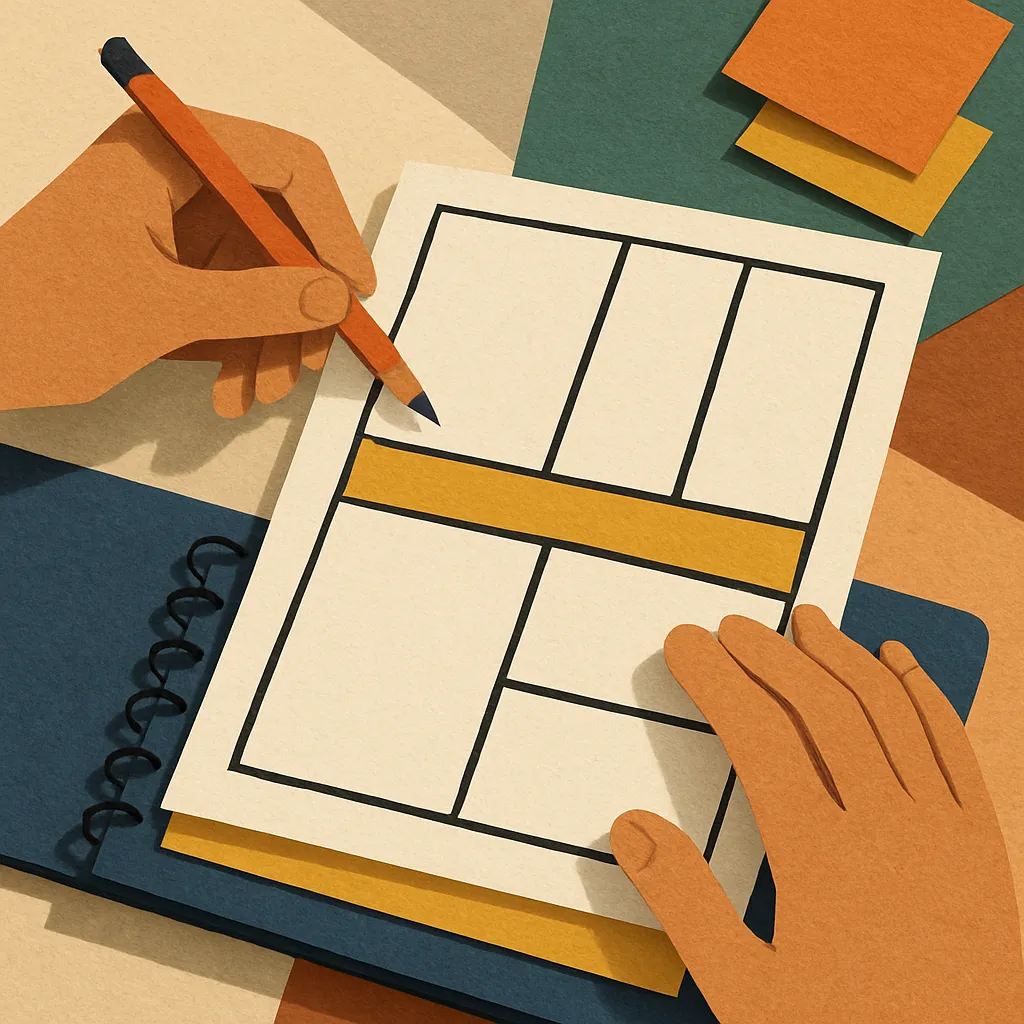
Graphic novels are not illustrated novels. They are visual scripts where white space and silence carry as much weight as dialogue. A few structural principles that translate well to AI-generated panels:
- Limit dialogue per panel to 30 words or fewer. Long speech bubbles crowd the art and slow reading pace.
- Use silent panels deliberately. A three-panel sequence showing a character walking to a window, looking out, and letting a coffee cup go cold communicates grief without a word.
- Vary your panel grid. Uniform grids feel static. A full-bleed establishing panel followed by a row of four tight close-ups creates natural rhythm.
- Reserve splash pages for your biggest moments. One panel filling an entire page is a commitment — save it for reveals, transformations, or climaxes.
When you start a graphic novel on Artistik, the prompt interface accepts scene-by-scene structure notes, so you can encode these pacing decisions directly rather than hoping the AI infers them.
Editing and Polishing Your Output
No AI output is a finished product on the first pass. Plan for a review cycle:
- Read for story continuity first. Does each scene transition make logical sense? Are character motivations clear from the visuals alone?
- Check character consistency. Note any panels where a character’s visual traits drift and flag them for regeneration with a more specific style-lock prompt.
- Review dialogue for voice. AI-generated dialogue often defaults to explanatory prose. Cut anything a character would not actually say out loud. Show the emotion in the panel; do not narrate it in the bubble.
- Test the reading flow with a fresh reader. Someone unfamiliar with your story will immediately reveal any panels that require caption support to parse.
Minor panel-level regenerations are faster than they sound. Most creators reach a satisfying draft within two or three revision passes.
Publishing and Selling Your Graphic Novel
Because everything made on Artistik is royalty-free and owned by you, your commercial options are wide open:
- Print-on-demand. Platforms like Lulu and IngramSpark accept PDF uploads and handle fulfillment globally. A standard 120-page black-and-white graphic novel prints for roughly $4–$6 per copy.
- Digital storefronts. ComiXology Unlimited, Gumroad, and Payhip all accept indie creator uploads with no exclusivity requirements.
- Kickstarter. Graphic novels consistently perform well in crowdfunding. A funded campaign typically covers your print run cost before a single copy ships.
- Serialization. Platforms like Webtoon and Tapas have built-in audiences hungry for new independent content and offer ad revenue sharing.
Frequently Asked Questions
Do I own the graphic novel I create with AI tools? On Artistik, yes. Everything you generate is yours to keep, sell, or distribute without paying royalties or licensing fees back to the platform. Always verify ownership terms on any tool you use before publishing commercially.
How long does it take to generate a full graphic novel? Generation time varies by length and complexity, but most users receive their illustrated ZIP file within minutes for a standard short-form graphic novel. Longer, more detailed projects may take longer to process.
Can I use AI-generated graphic novels in print, not just digital? Yes. The files are delivered at print-ready resolution, and the PDF or image assets in your ZIP can be uploaded directly to print-on-demand services without additional formatting work in most cases.
What if I want a very specific art style, like a particular comic era or cultural aesthetic? Style specificity in your prompt is the key variable. Describe the era (golden-age American comics, 1990s manga, European bande dessinée), name the technique (ligne claire, woodcut, watercolor wash), and describe the color palette. The more granular your style description, the closer the output will be to your vision.
Ready to Make Your Graphic Novel?
The creative part — the story, the characters, the stakes — has always been yours. Now the visual production is too. If you have a story that deserves panels, give it the format it was built for. Head to Artistik, describe your world in plain language, and walk away with a finished, illustrated graphic novel that belongs entirely to you.