AI Graphic Novels: How to Turn One Prompt Into a Full Story
Learn how to write a compelling AI graphic novel from a single prompt — cover scene structure, dialogue, pacing, and download your finished illustrated ZIP today.
Most creators stall not because they lack a story idea, but because translating that idea into panels, dialogue, and pacing feels technically overwhelming. With AI graphic novel tools like Artistik, you can go from a single sentence to a fully illustrated, downloadable story without drawing a single line yourself. This guide walks you through exactly how to write a prompt that works, how to shape your story before you hit generate, and what to do with the finished file.

Why Graphic Novels Are Uniquely Hard to Produce — and Why AI Changes That
A prose novel lives entirely in words. A graphic novel demands that every scene also work visually: panel composition, facial expressions, color mood, and the rhythm of how the eye moves across a page. Traditionally, that meant hiring an illustrator, a letterer, and a colorist — a process that could take months and cost thousands of dollars.
AI generation collapses that pipeline. Instead of managing a team, you manage a prompt. The creative decisions that matter — character motivation, scene order, emotional tone — stay entirely in your hands. The production decisions that were once gatekeepers simply disappear.
The result: indie creators who have never held a stylus are now publishing graphic novels on Amazon KDP, Etsy, and Gumroad. The files you get from Artistik’s graphic novel format are royalty-free, meaning you own them outright and can sell them immediately.
The One Mistake That Kills Most AI Graphic Novel Prompts
The most common failure is writing a prompt that describes a theme instead of a scene. “A story about a girl who discovers she has powers” is a theme. “A teenage girl in a rain-soaked subway station notices her reflection moving independently of her body” is a scene — and scenes are what graphic novels are actually made of.
Before you write your prompt, answer three questions:
- Who is the main character and what do they want right now, in this moment?
- What is physically happening in the opening image?
- What is the single thing that will change by the last panel?
Once you can answer those three questions in two sentences, you have a working prompt.
How to Structure Your Story Before You Prompt
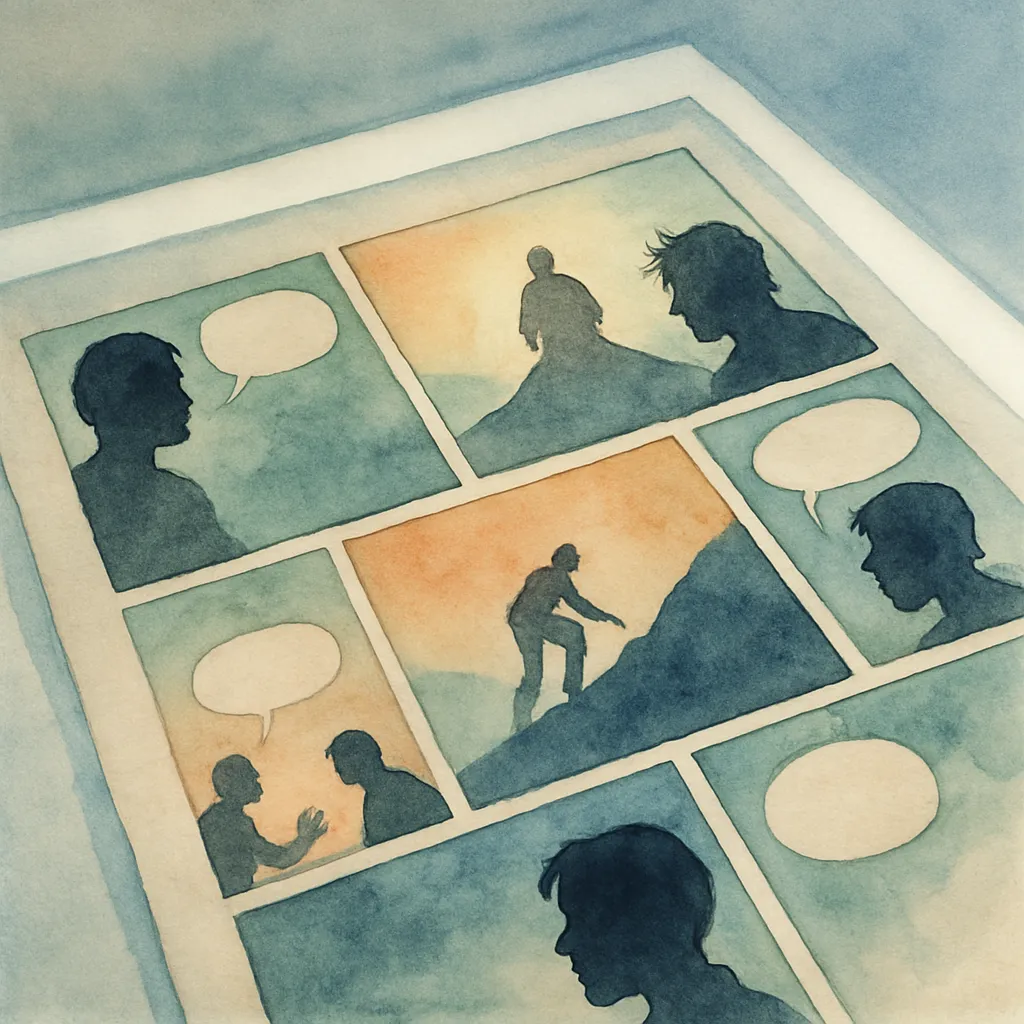
Graphic novels, even short ones, follow a recognizable structure. The good news is that this structure maps cleanly onto AI prompt design. Here is a simple framework:
| Story Beat | What It Does | Where It Falls |
|---|---|---|
| Hook | Establishes character and visual world | Pages 1-3 |
| Inciting incident | Disrupts the status quo | Pages 4-6 |
| Rising tension | Raises stakes through conflict | Pages 7-18 |
| Climax | The point of no return | Pages 19-22 |
| Resolution | Emotional payoff, not necessarily tidy | Pages 23-24 |
When you describe your story to the AI, you are essentially scripting these beats in prose. You do not need to specify panel counts. You do need to give the AI enough context to know what each section should feel like.
A practical approach: write five sentences, one per beat. Each sentence becomes a chapter-level instruction. This gives the generation model a narrative spine to hang images and dialogue on.
Writing Dialogue That Works in Panels
Prose dialogue can run long. Panel dialogue cannot. A speech bubble that holds more than 25 words starts to crowd out the image, which defeats the purpose of the medium.
When you write dialogue guidance in your prompt, think in fragments and reactions, not speeches. Characters in graphic novels often say less than they mean. The image carries subtext that words do not need to repeat.
Practical rules for panel dialogue:
- One idea per bubble, one bubble per panel when possible
- Questions carry more tension than statements
- Silence — an empty panel or a character shown from behind — is a legitimate dialogue choice
- Avoid exposition dumps; let the illustration show what the character would otherwise have to explain
If your prompt includes sample lines of dialogue, keep each example under 20 words. The AI will calibrate to that register.
Choosing Visual Tone in Your Prompt
You do not need to know art terminology to direct the visual feel of your graphic novel. You need to describe the emotional temperature of your story with enough specificity that the generator can match it.
Here are contrast pairs that help clarify tone:
- High contrast and deep shadows versus soft watercolor washes
- Cluttered urban environments versus sparse natural landscapes
- Exaggerated expressive faces versus reserved, realistic features
- Warm amber and ochre palette versus cold blue and grey palette
Pick one descriptor from each pair that fits your story and include them in your prompt. Four short descriptors do more work than a paragraph of vague mood language.
What You Get When You Download the Finished File
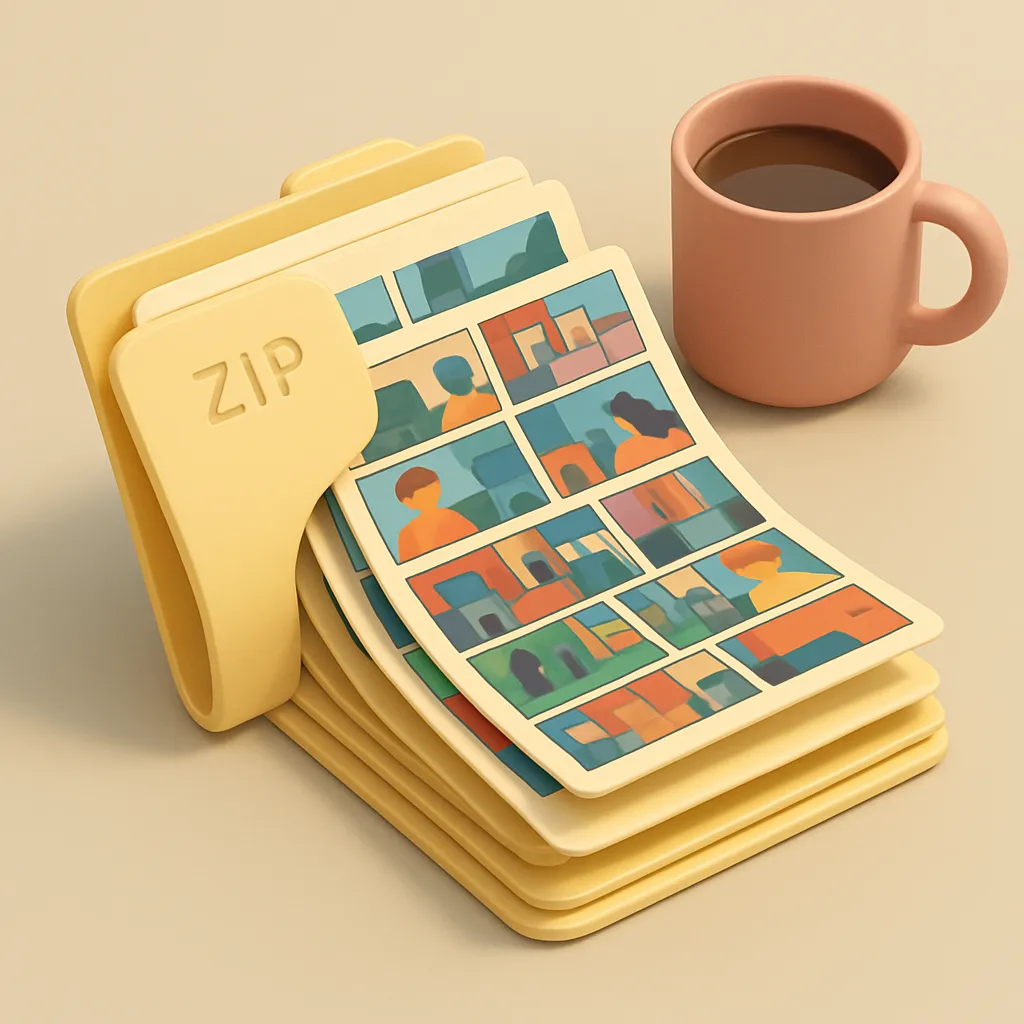
When you start a graphic novel on Artistik and your generation completes, you receive a ZIP archive. Inside that archive you will find:
- Full-resolution illustrated pages, print-ready at 300 DPI
- Panels laid out in standard comic page dimensions
- Lettered dialogue already placed in speech bubbles
- A consistent visual style held across all pages
Because everything is royalty-free, you can publish immediately to KDP, upload to Etsy as a digital download, print through a service like Lulu, or sell directly on Gumroad. There are no licensing fees, no attribution requirements, and no restrictions on commercial use.
Editing and Iterating After Your First Generation
Your first output is a draft, not a final product — the same way a first chapter is a draft. The difference is that an AI graphic novel draft is already 90% of the way to finished.
Common refinements creators make after a first generation:
- Tightening dialogue in specific panels using a text editor
- Swapping a page into a different chapter order when pacing feels off
- Regenerating a single scene with a more specific prompt if the visual tone drifts
- Adding a title page or back matter before printing
The file format makes these edits accessible even to creators with no design background. If you can open a PDF and a text document, you can refine your graphic novel.
Frequently Asked Questions
Do I need to know how to draw or use design software to make an AI graphic novel? No. The entire illustrated output is generated from your text prompt. You interact with the tool through language, not through any drawing or design interface.
How long will a finished AI graphic novel be? Length depends on the platform and the story complexity you describe. Artistik produces complete graphic novel files sized for standard comic or trade paperback formats, giving you a finished product that is ready for print or digital distribution.
Can I sell the graphic novel I create with Artistik? Yes. Everything created on Artistik is royalty-free and owned by you. You can sell it in any format, on any platform, without paying licensing fees or providing attribution.
What kinds of stories work best as AI graphic novels? High-concept stories with strong visual hooks perform best: science fiction, fantasy, horror, and action-adventure all translate well because they rely on imagery that is distinctive and easy to direct through language. That said, intimate character dramas and literary stories work fine too — the key is that you describe scenes rather than themes.
Ready to Make Your Graphic Novel?
The creative work — the story, the characters, the emotional arc — has always been the hard part and it always will be. The production work no longer has to be. Artistik handles the illustration, the layout, and the file packaging so you can spend your time on the decisions that actually require a human. Write your prompt, generate your pages, download your file, and publish. The whole process takes a fraction of the time it would take to find and brief a single illustrator.