AI Coloring Book for Toddlers, Made Simple
Make bold, closed-shape coloring pages toddlers can actually fill in. Here's how to design, print, or sell a toddler coloring book with AI.
Little kids don’t need fancy shading or tiny details. They need big, friendly shapes with thick lines and plenty of open space, so a crayon held in a whole fist still lands somewhere good. The nice part: you can make exactly those pages from a single sentence, print them at home, or turn them into a book you sell. This guide walks you through it.
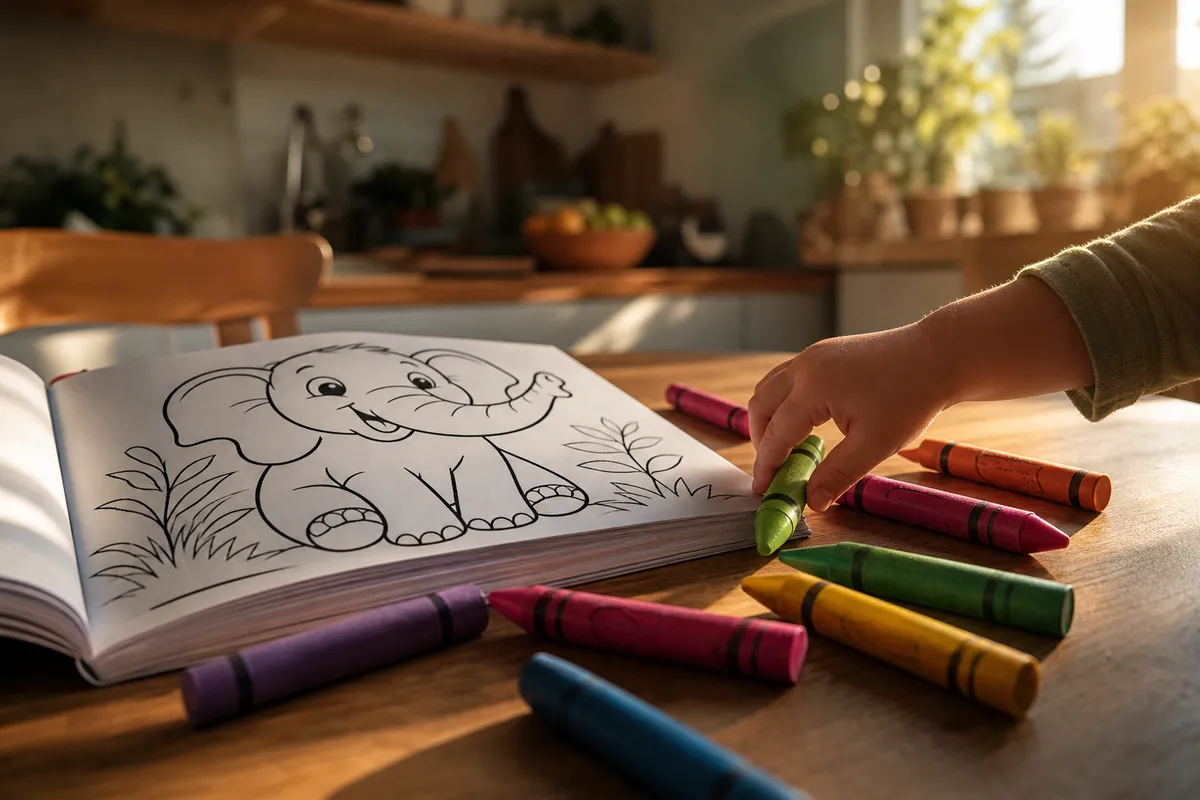
What makes a coloring page good for toddlers
Before you make anything, it helps to know what you’re aiming for. A page that works for a six-year-old can frustrate a two-year-old, and the difference comes down to a few simple things.
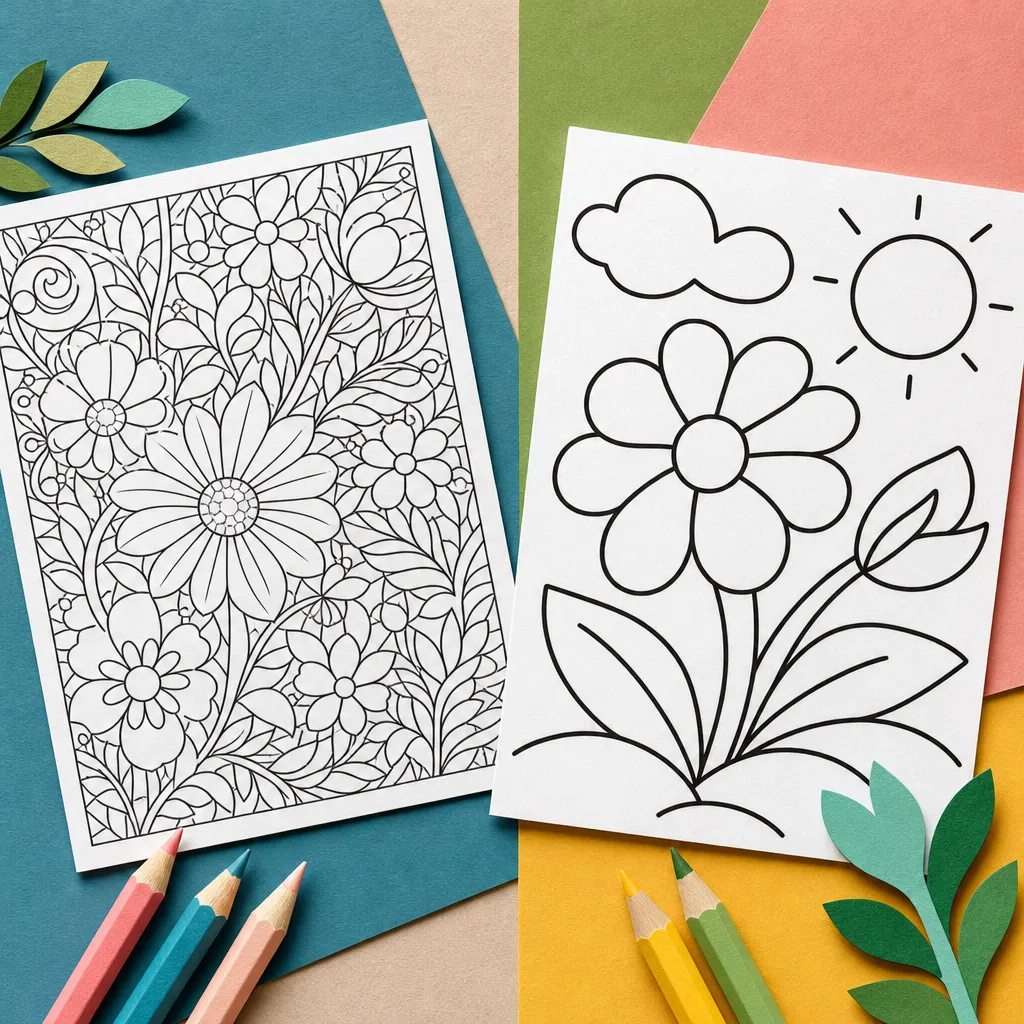
Thick, closed outlines. Toddlers color outside the lines constantly, and that’s fine. But the lines themselves need to be bold enough to see and fully closed, with no little gaps where a shape trails off. Closed shapes also matter if a parent wants to fill in with markers without the color running everywhere.
Big, simple subjects. One happy animal. One truck. One flower. A single clear thing filling most of the page beats a busy scene with ten small objects. Little hands can’t manage tiny regions, and little attention spans don’t want to.
Lots of open space. Wide areas to fill mean a toddler can scribble and still feel successful. Detailed, intricate pages are lovely for grown-ups but discouraging for a three-year-old.
No tiny interior details. Skip the texture lines, the cross-hatching, the fiddly background patterns. Those are great for older kids. For toddlers, less is genuinely more.
When you build your pages with the Coloring Book format, you can set the difficulty to simple and the audience to little kids, which pushes the art toward exactly these qualities: clean, closed-shape line art with room to breathe.
How AI makes toddler coloring pages
The old way to make a coloring book was to draw every page by hand or hire an illustrator, which is slow and expensive if you want twenty-four consistent pages on one theme. AI changes the math. You describe the theme and the feel, and you get print-ready line-art pages in one consistent style.
The Coloring Book format on Artistik is built for this. You give it a theme, choose how many pages you want (12, 24, 36, or 48), pick a difficulty (simple, medium, or detailed), and tell it who it’s for (little kids, older kids, or grown-ups). You can add captions or journaling prompts if you like, though for toddlers a single word per page — “Dog,” “Sun,” “Boat” — is often plenty, and many people leave them off entirely.
What you get back is a print-ready PDF in letter, A4, or square size, with clean, closed-shape line art drawn in one consistent look across every page. That consistency is the thing that’s genuinely hard to do by hand across dozens of pages, and it’s what makes a stack of pages feel like a real book instead of a random pile.
One honest limit worth knowing up front: the Coloring Book format makes interior pages only. The cover is yours to design. That’s deliberate — covers have their own rules, especially if you plan to sell on a store — so plan to make or commission a cover separately.
A step-by-step walkthrough
Here’s the whole process, start to finish, for a first toddler coloring book.
1. Pick one clear theme
Toddler books sell and delight when they’re focused. “Animals” is okay; “Friendly farm animals” is better; “Baby farm animals, one per page” is best. A tight theme keeps the art consistent and makes the book easy to describe to a parent browsing.
2. Choose your settings
For a toddler book, start with:
- Audience: little kids
- Difficulty: simple
- Pages: 24 is a comfortable first size — enough to feel like a real book, not so many that it drags
- Size: letter if you’re printing at home in the US, A4 elsewhere, or square for a cute gift-book feel
3. Write a clear one-sentence brief
The more specific your sentence, the closer the first result lands. Here’s an example you can adapt and paste:
A 24-page coloring book for toddlers aged 2 to 4, one friendly baby farm animal per page — chick, lamb, piglet, calf, duckling, bunny — drawn with very thick bold outlines, big simple shapes, lots of open space to color, no tiny details, no background clutter, happy faces, square format.
Notice what that brief does: it names the age, the subjects, the line weight, the open space, and what to leave out. The “no tiny details, no background clutter” part does real work.
4. Preview, then make
You can start free — your first piece is on us, with up to a dollar of free starter credit, which is enough to make one first coloring book and see how it turns out. Previews are watermarked so you can check the style, page count, and feel before you commit.
5. Flip through every page
AI is fast but not flawless. Look for any page where a shape didn’t fully close, where a subject got too detailed, or where the art drifted off-theme. Regenerate anything that doesn’t fit. For toddlers especially, be strict about closed shapes and open space.
6. Add your cover and finish
Design a cover separately — a simple title, a friendly character, bright colors — and combine it with your interior PDF. Now you have a complete book, ready to print or publish.
Printing at home versus selling on KDP
What you do next depends on your goal.
Printing for your own kids or a classroom
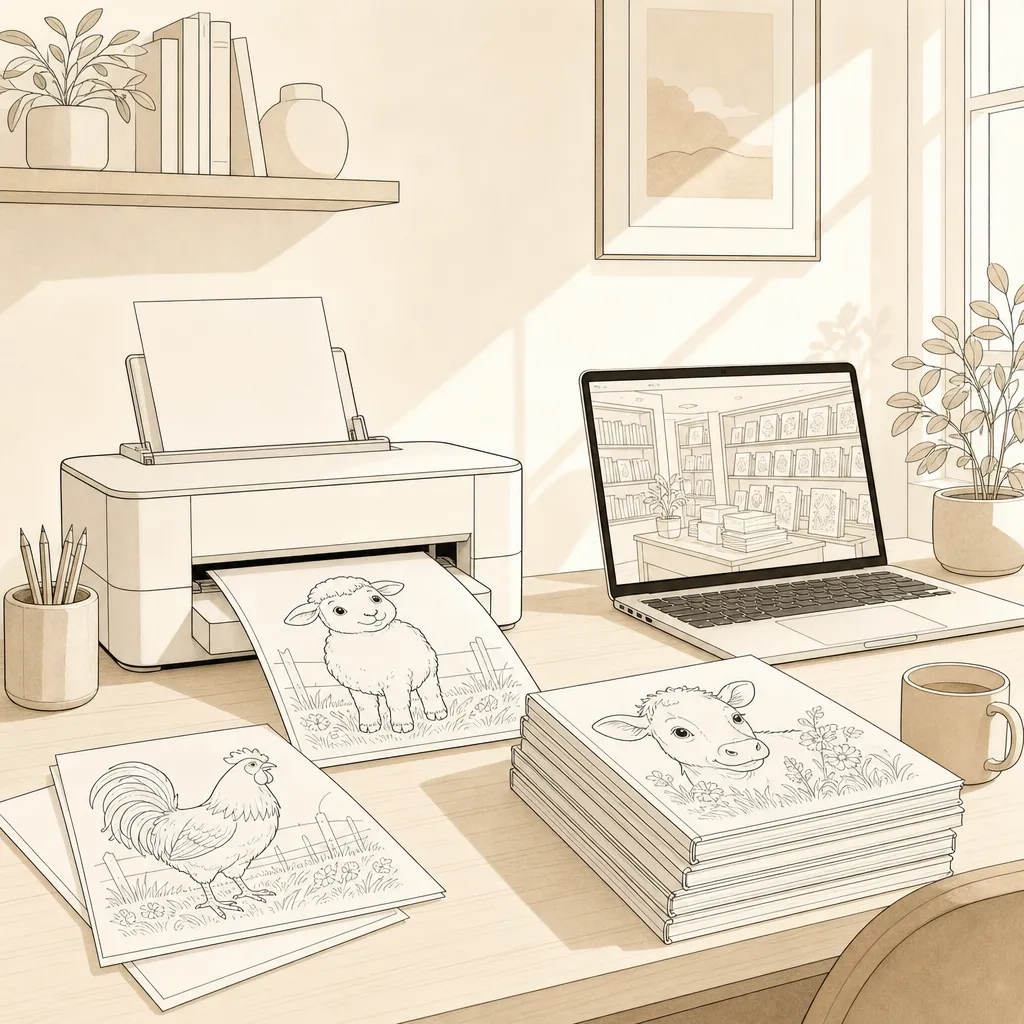
This is the easy path. Your PDF prints fine on any home printer. Print single-sided so crayon and marker don’t bleed through to the next page, use slightly heavier paper if you have it, and bind with a simple folder, a binder clip, or a trip to a copy shop for spiral binding. A classroom can print a set and hand them out.
Selling on Amazon KDP
If you want to sell, Amazon’s Kindle Direct Publishing is the common home for coloring books. Your interior PDF needs to match KDP’s trim size and margin rules, so check their current page setup requirements and export accordingly. You’ll design a cover to their cover template, write a title and description, and set a price.
Because pricing a KDP book involves page count, trim size, and printing cost, it helps to plan the numbers before you commit. Artistik has a free KDP coloring book page and price planner among its no-signup tools that helps you think through page count and pricing. It’s free to use and doesn’t require an account.
A practical note on selling to parents of toddlers: emphasize the things that matter to them. “Big bold lines,” “no small details,” “perfect for ages 2–4,” “single-sided pages.” Those phrases match how a tired parent actually shops.
What it costs to make
Here’s how the Coloring Book format compares to a few related things you might make for kids, using Artistik’s measured per-piece costs.
| Format | Typical cost of one finished piece |
|---|---|
| Coloring Book | about $0.50–$1.50 |
| Song (a sing-along for little ones) | about $0.20–$0.70 |
| Audiobook (a short bedtime story) | about $0.25–$2.50 |
| Explainer (a faceless kids’ video) | about $0.25–$0.70 |
Paying is simple. Start free — your first piece is on us with the starter credit. After that, you can keep any single finished piece for a one-off $4.99, add credit from $5 whenever you want more, or pick a monthly plan from $9 that includes that dollar amount of making every month and removes watermarks. See pricing for the full picture, including the bonus on bigger credit packs.
Because a toddler book is still-image line art, it doesn’t need any of the purchased-credit video features — a single coloring book sits comfortably at the low end of that range.
Mistakes that make a toddler book fall flat
A few patterns trip up first-time makers.
Too much detail. The single most common mistake. If a page looks beautiful to you as an adult, it may be too intricate for a two-year-old. Keep pushing toward simpler.
Inconsistent style across pages. This is less of a risk with AI since the format draws everything in one consistent style, but it’s worth a flip-through to confirm. A book where every animal is drawn differently feels unfinished.
Gaps in the outlines. Little gaps where a shape doesn’t close look fine on screen and frustrate when a marker bleeds through. Scan for them.
Forgetting the cover. Remember, the format makes interior pages only. Budget a little time to make a cover, or your “finished” book isn’t quite finished.
Printing double-sided. Crayons and markers bleed. Single-sided pages, or at least a blank back, saves a lot of ruined artwork.
Ideas for toddler coloring themes that work
If you’re stuck on a theme, these tend to land well with the little-kid crowd:
- Baby animals, one per page
- Big friendly vehicles — truck, bus, boat, plane, tractor
- Simple shapes with happy faces
- Fruits and vegetables, one big one per page
- Weather and sky — sun, cloud, rainbow, moon
- First words, where each page is one simple object with its name
- Seasons and holidays, kept to one bold subject per page
Any of these can become a full 24-page book from a single brief. And if you build a small series — a farm book, a vehicle book, a shapes book, all in a matching style — you’ve got the start of a little collection, which is exactly how coloring books sell well on KDP.
If you later want to make story content for the same young audience, the same one-sentence approach works for an audiobook bedtime story or a simple song to sing along with. And if you’re building an ongoing presence — say, a weekly show for parents about early learning — Autopilot can run a podcast channel for you, writing and voicing episodes on a schedule.
Frequently asked questions
Can the AI make pages simple enough for a two-year-old? Yes. Set the audience to little kids and the difficulty to simple, and say “very thick bold outlines, no tiny details, lots of open space” in your brief. The clearer your sentence, the closer the result.
Do I own the coloring book I make? Yes. What you make is yours — royalty-free, commercial use allowed, no attribution and no revenue share. That means you can print it, give it away, or sell it on a store like Amazon KDP.
Does Artistik make the cover too? No. The Coloring Book format makes interior pages only, as a print-ready PDF. You design the cover separately, which also lets you match whatever a store like KDP requires.
How many pages should a toddler book have? A first book of 24 pages is a comfortable size — enough to feel complete without dragging. You can choose 12, 24, 36, or 48. For very young kids, shorter and simpler often works better than longer.
Is it free to make a coloring book? Your first piece is on us, with up to a dollar of free starter credit — enough to make one coloring book and see how it looks. After that, you can keep a single piece for $4.99, add credit from $5, or choose a monthly plan from $9.
Ready to turn one sentence into a book full of big, friendly pages? Describe your theme, pick little kids and simple, and let the first one be on us. Start with the Coloring Book format and see a watermarked preview before you keep anything — your toddlers (or your readers) will be filling in those bold shapes in no time.