AI Audiobook Narration vs Human Narrators: Cost, Quality & Speed
Weighing AI audiobook narration against human voice talent? This breakdown covers real costs, quality differences, turnaround times, and when each option makes sense.
If you are publishing an audiobook in 2025, the question is no longer whether AI narration is viable — it is whether it is the right choice for your specific project, budget, and timeline. This article gives you a clear, honest comparison of AI audiobook narration versus hiring a human narrator across three dimensions that matter most: cost, quality, and speed.
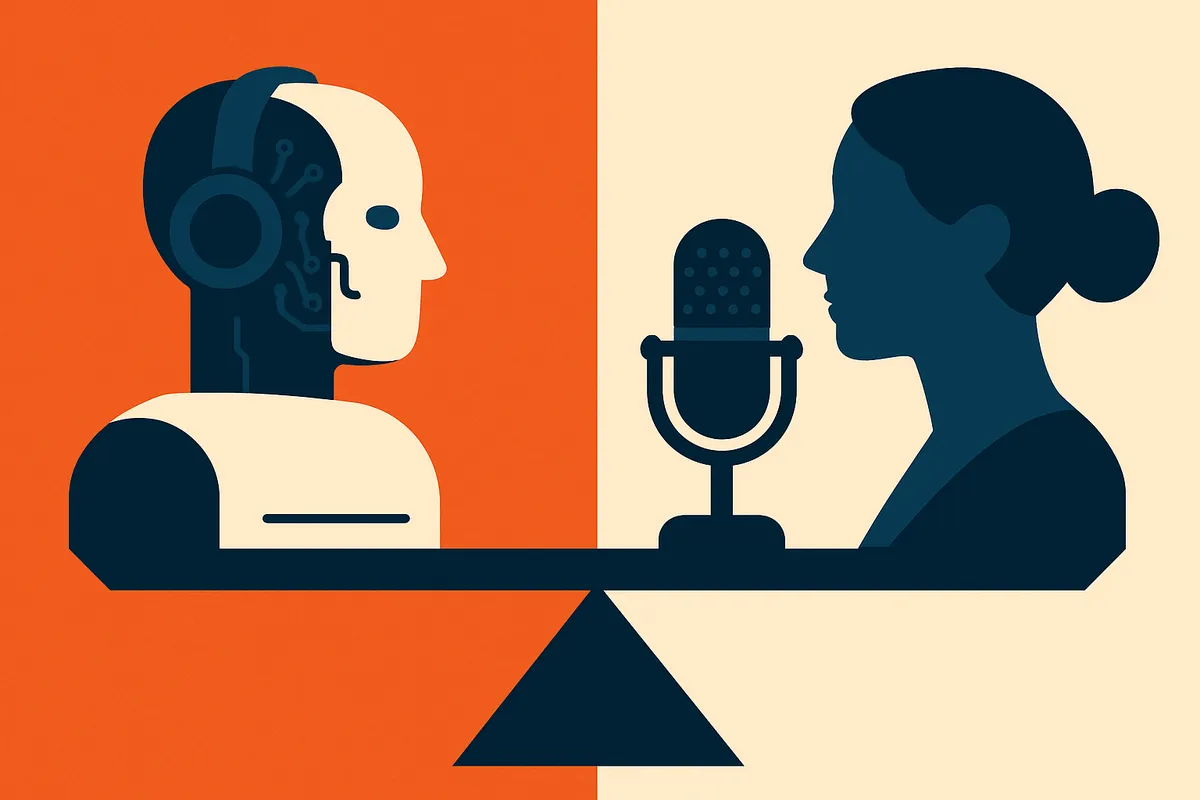
What the Numbers Actually Look Like
Cost is usually the first thing an indie author asks about, and the gap between AI and human narration is significant enough to change the math on your entire publishing plan.
Human narrators typically charge on a per-finished-hour (PFH) basis. Rates on ACX, the largest audiobook marketplace, range from roughly $150 to $400 PFH for non-royalty-share deals. A 10-hour finished audiobook — the equivalent of an 80,000-word novel — can therefore cost anywhere from $1,500 to $4,000 upfront, before you factor in any revision rounds or mastering fees. Established narrators with a track record and recognizable credits charge considerably more.
AI narration collapses that range dramatically. Platforms that include AI audiobook production, like Artistik, bundle narration into the cost of creating the project itself, meaning your manuscript becomes a finished, downloadable MP3 without a per-finished-hour invoice. For authors producing multiple titles a year, that difference compounds fast.
| Factor | Human Narrator | AI Narration |
|---|---|---|
| Typical cost (10-hr book) | $1,500 – $4,000+ | Included in platform cost |
| Revision fees | Often charged separately | Regenerate on demand |
| Voice licensing | Covered in contract | Royalty-free by default |
| Upfront payment required | Usually yes | No |
Turnaround Time: Weeks vs. Minutes
A human narrator has to read your manuscript word for word, record in takes, self-edit, and deliver files — a process that typically takes two to six weeks for a full-length book, depending on their workload. If you request revisions after review, add another one to two weeks. If they become unavailable mid-project, you may start over entirely.
AI narration is measured in minutes to hours, not weeks. Once your manuscript is uploaded, the audio is generated without scheduling, studio booking, or waiting in a queue. For authors chasing a launch date, running a series on a tight release schedule, or producing content for a subscription audience, that speed is not a minor convenience — it is a strategic advantage.
Honest Assessment of Audio Quality
This is where the conversation requires nuance, because “quality” means different things in different contexts.
Human narrators bring genuine interpretive performance. A skilled narrator reads subtext, adjusts pacing for tension, differentiates characters through subtle vocal shifts, and brings emotional authenticity that listeners feel even when they cannot articulate why. For literary fiction, memoir, and character-driven drama, that layer of performance still gives human narrators a meaningful edge.
AI narration has closed the gap substantially in the last two years. Modern AI voices handle phrasing, punctuation-based pacing, and tonal variation far better than early text-to-speech systems did. Listeners who are not paying close attention frequently cannot tell the difference on non-fiction, business books, how-to guides, genre fiction, and children’s content.
The categories where AI still lags: - Books with large casts of distinct characters requiring differentiated voices throughout - Highly literary prose where cadence and rhythm are central to the experience - Memoir or personal essay where the author’s own voice carries emotional weight - Comedy that depends on precise timing and inflection
For everything else — thrillers, romance, fantasy, self-help, history, young adult — AI narration is production-ready.
Rights, Royalties, and Ownership
Human narrator contracts vary widely. Royalty-share arrangements on platforms like ACX split earnings 20–40% with the narrator for the life of the contract, often with a seven-year exclusivity clause. Flat-fee contracts give you full rights but require that larger upfront investment.
With AI-generated audiobooks through Artistik, the finished MP3 is royalty-free and yours to keep, sell, or distribute to any platform — ACX, Findaway Voices, your own website, or a Patreon for subscribers. There is no revenue split with a voice actor and no exclusivity clause to negotiate around.
When to Choose a Human Narrator
None of this means human narrators are obsolete. There are clear situations where hiring a professional voice actor is still the right call:
- Your book is a prestige literary release and reviews will scrutinize production quality
- You are submitting to an award where audio performance is evaluated
- You have a significant marketing budget and the narrator’s existing audience will drive sales
- Your story genuinely requires multi-character voice differentiation at a level current AI cannot match
- You are a celebrity or public figure and listeners expect to hear your own voice
When AI Narration Is the Better Choice
- You are an indie author self-publishing on a tight budget
- You are producing a series and need consistent narration across multiple volumes quickly
- Your book is non-fiction, genre fiction, or content where performance nuance is secondary to information delivery
- You want to test the audiobook market before committing a large upfront investment
- You need to publish in multiple languages and cannot afford native-speaking narrators for each
If you want to start an audiobook from a finished manuscript without waiting weeks or managing contractor relationships, AI narration removes almost every barrier that previously kept authors out of the audio market.
Frequently Asked Questions
Can I sell an AI-narrated audiobook on Audible or other major platforms? Yes, but platform policies vary. ACX currently requires disclosure that AI voices were used in production. Other distributors like Findaway Voices (now Draft2Digital) have their own guidelines. Always review the current terms of whichever platform you distribute through, as policies in this area are still evolving.
Will listeners be able to tell the difference between AI and human narration? For most non-fiction and genre fiction, casual listeners typically do not notice. Audiophiles and experienced audiobook consumers are more likely to detect AI narration, particularly in books that demand strong character differentiation. Quality varies significantly by platform, so generating a sample chapter first is always worth doing.
What happens if I want to update my audiobook after publishing? With AI narration, you can regenerate specific sections to reflect corrections or new editions without re-recording the entire book. With a human narrator, any updates require scheduling new studio time and potentially paying revision fees.
Does AI narration work for children’s books or picture books? AI narration works well for chapter books and middle-grade fiction. For picture books, the audio experience is typically paired with visual content, which is a different production consideration — closer to a read-aloud video than a traditional audiobook.
Try It Before You Commit
The best way to decide is to hear your own words narrated. Artistik lets you go from a manuscript to a finished, downloadable audiobook without a studio, a contractor, or a multi-week wait. If your project is a good fit for AI narration, you will know within the first listen — and you will have a production-ready file ready to publish the same day.